
Key Design Priorities Shaping Commercial Office Spaces in 2026
- Posted by Ashley Easterwood
- On January 7, 2026
As workplace expectations continue to evolve, commercial office interiors are being designed with a stronger focus on efficiency, adaptability, and long-term performance. In 2026, architects and designers are prioritizing interior solutions that support changing work styles while maximizing the value and functionality of the overall space.
Interior systems play an important role in ensuring office environments remain flexible, visually cohesive, and built to perform over time.
Designing for Flexibility and Adaptability
Flexibility is a key priority shaping commercial office interiors as organizations adjust to hybrid work models and evolving team structures. Office layouts must be able to change without requiring extensive renovations or disruption. Interior wall systems and office fronts that allow for reconfiguration provide long-term value by supporting layout changes while maintaining consistency throughout the space. Adaptable interior framing systems make it possible to modify office layouts as needs evolve, helping designers create environments that can grow with the business.
Maximizing Space Efficiency in Office Layouts
Efficient use of space continues to influence commercial office interiors, particularly in environments where square footage is limited. Clean lines and minimal framing profiles help preserve usable floor space while still defining offices, meeting rooms, and collaborative areas. Thoughtful layout planning ensures that space supports productivity without feeling crowded or restrictive. Interior systems designed with slim profiles allow designers to maintain open, functional layouts while maximizing the usable footprint of the office.
Balancing Transparency and Privacy
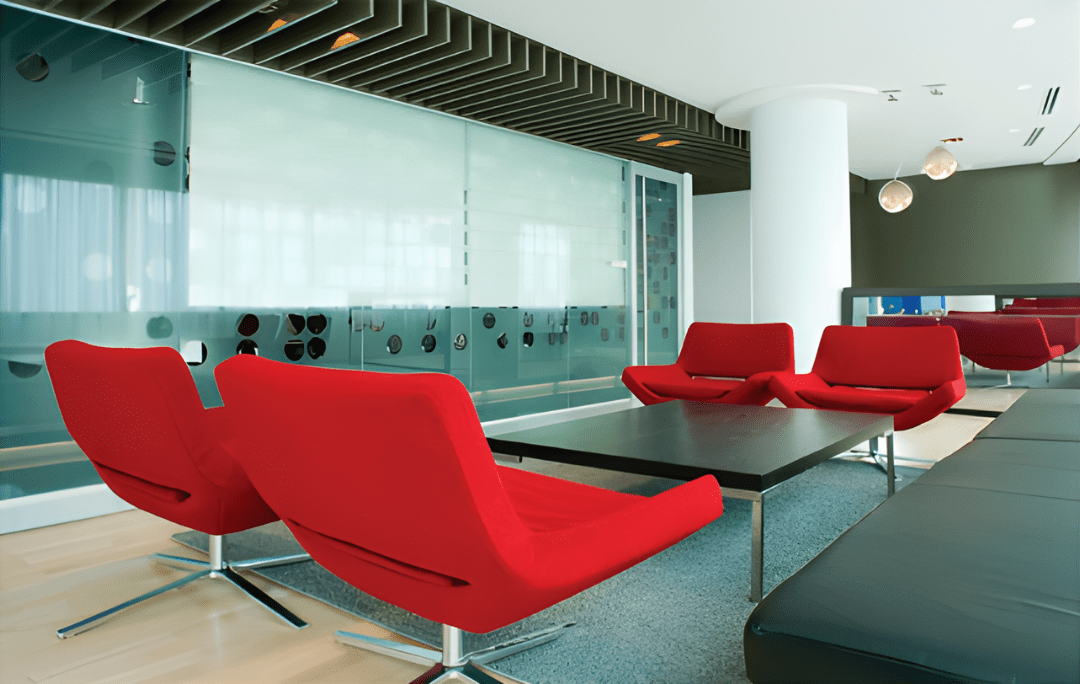
Transparency remains an important element of modern commercial office interiors, supporting daylight and visual connection throughout the space. Interior glass walls and glazed office fronts allow light to move freely while maintaining separation between different work areas, creating a balanced and modern environment. Privacy and acoustics are also critical considerations. When needed, sound-rated systems can be integrated to help manage noise levels and support focused work without compromising the overall openness of the design.
Prioritizing Durability and Long-Term Performance
Commercial office interiors must withstand daily use in high-traffic environments while maintaining alignment, appearance, and performance over time. Durable interior framing systems help reduce maintenance needs and support the long-term value of the space, making them a practical choice for modern office design. Selecting systems designed for longevity ensures that office interiors continue to perform as workplace needs evolve.
Supporting the Future of Commercial Office Interiors
As these priorities continue to shape commercial office interiors in 2026, interior systems remain a foundational element of effective office design. Solutions that support flexibility, efficiency, and durability help create environments that are prepared for future change. At Frameworks Manufacturing, we provide interior framing solutions designed to support modern commercial office interiors. Contact our team to learn more about how Frameworks can support your next project.
Don’t forget to follow us on Facebook, Twitter, and LinkedIn!
0 comments on Key Design Priorities Shaping Commercial Office Spaces in 2026