
Choosing the Right Materials for Commercial Interior Systems
- Posted by Ashley Easterwood
- On March 25, 2026
The performance, longevity, and long-term worth of commercial interior systems are significantly influenced by the choice of materials. Interior framing systems in contemporary commercial architecture need to do more than just delineate spaces. They must promote adaptability and enhance the environment’s overall design.
Choosing the appropriate materials, from glazing systems to aluminum framing, can affect how easily spaces can change to meet changing needs while still looking professional.
Durability and Long-Term Performance for Commercial Interior Systems
Daily wear is caused by foot traffic, frequent use, and shifting layouts in commercial spaces. Materials used in commercial interior systems should therefore be able to sustain both structural integrity and aesthetic coherence over time.
Because aluminum framing systems provide a balance between strength and lightweight performance, they are frequently chosen. Aluminum resists corrosion and keeps its structural qualities in high-traffic areas, in contrast to heavier materials. This durability keeps interior spaces’ architectural appearance intact while lowering maintenance needs.
Commercial interior systems can be made to last for many years without needing major repairs or replacements by selecting materials that can withstand regular use.
Adaptability to Shifting Workspaces
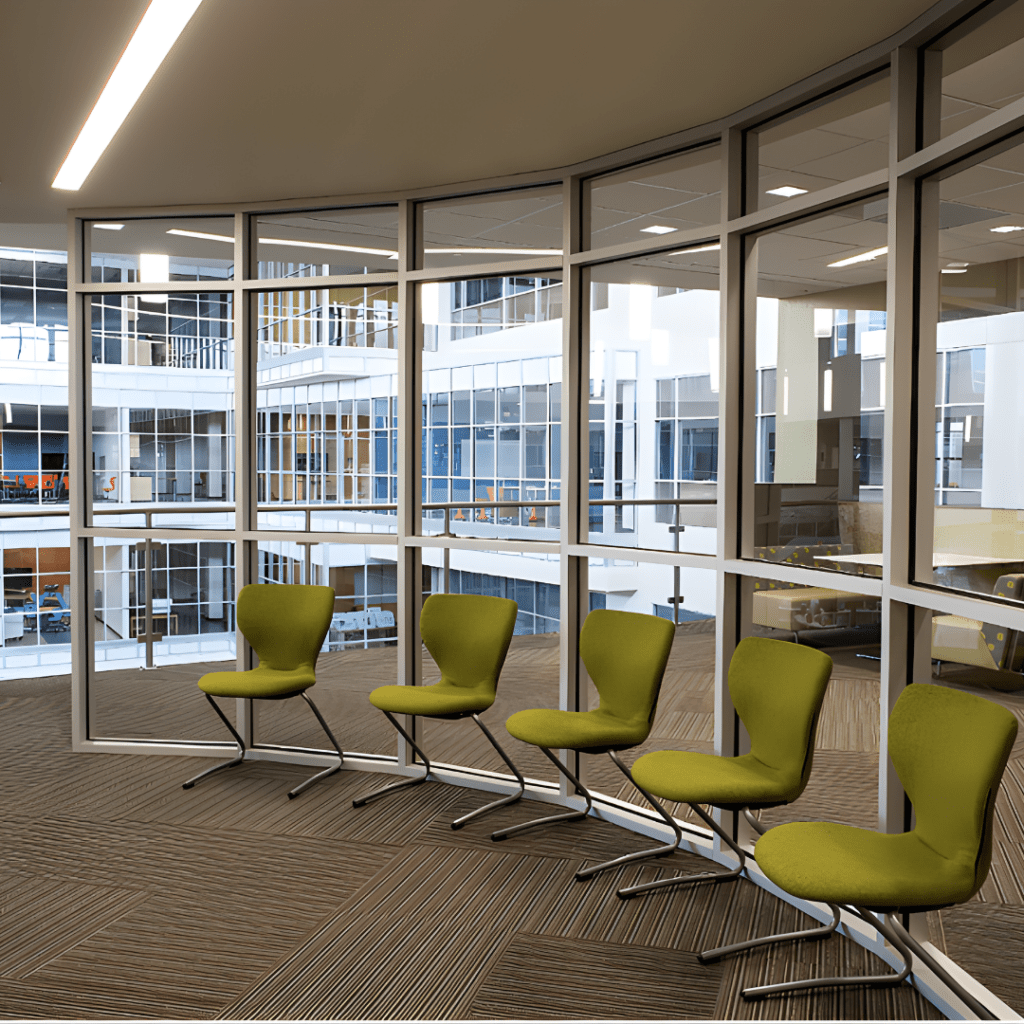
Contemporary business environments are always changing. In order to accommodate new teams, collaboration areas, or private meeting rooms, offices, healthcare facilities, and other commercial spaces may need to modify their layouts.
These modifications can be made more effectively with modular framing systems. Interior systems can be expanded or modified without requiring significant structural reconstruction thanks to materials like aluminum.
Commercial interior systems are ideal for environments where adaptability is crucial because of their flexibility.
Light and Visual Openness
The way light flows through a commercial space is also influenced by material selections. Natural and artificial light can move more freely throughout interior spaces with systems that use glazing with narrow framing profiles.
This strategy preserves defined workspaces and privacy where necessary while fostering a more airy and open atmosphere.
Supporting Modern Commercial Design
Performance and design should be balanced in commercial interior systems. Architects and designers can create interiors that support both functionality and long-term usability by using materials that offer clean lines, durability, and adaptability.
Frameworks Manufacturing creates aluminum framing solutions that support commercial interior systems that are flexible, long-lasting, and aesthetically pleasing.
Don’t forget to follow us on Facebook, Twitter, and LinkedIn!
0 comments on Choosing the Right Materials for Commercial Interior Systems