
How Door and Frame Integration Impacts Commercial Interior Systems
- Posted by Ashley Easterwood
- On April 22, 2026
In commercial interiors, performance depends on how well each part works together. Door and frame integration is a crucial aspect of this. It affects daily operations, durability, and how well a space balances form and function. When integrated correctly, doors and framing systems function as one. This improves reliability, lowers maintenance needs, and supports long-term performance.
System Performance Starts with Integration
Door and frame integration ensures that all components fit together and work as intended in a commercial interior system. When doors are designed with their framing systems, installation becomes more accurate, hardware functions better, and stress on key parts is minimized.
This coordination has a direct effect on durability. Systems that are not properly integrated often face misalignment, increased wear, and repeated service problems. Over time, these issues can diminish usability and increase ownership costs. A system-based approach tackles these problems by focusing on compatibility and performance from the beginning.
Supporting Openness Without Compromising Function
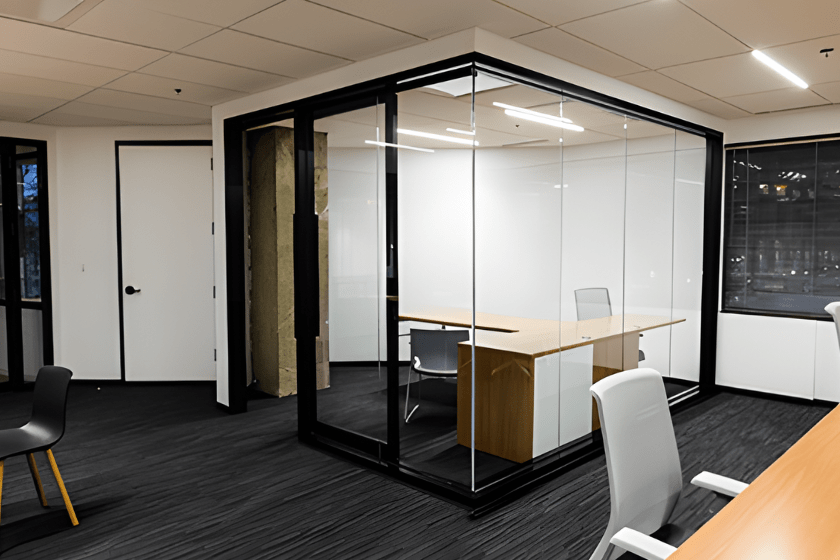
Modern commercial spaces often focus on openness, using glass and aluminum framing to enhance visibility and flow. Door and frame integration is key to maintaining this openness while still addressing needs like privacy, sound control, and restricted access.
Integrated systems allow doors to fit seamlessly within glass and framing setups. This keeps sightlines clean and design uninterrupted. Whether using full-glass doors or framed options, proper integration ensures that transparency doesn’t sacrifice usability. Instead, it fosters an environment where openness and separation work well together.
Designed for Flexibility and Change
Commercial spaces are always changing. Teams expand, workflows evolve, and layouts must adjust. Door and frame integration supports this by allowing systems to be rearranged without major disruptions.
When integration is part of the system, changes like moving walls, enlarging offices, or reconfiguring spaces can be done more smoothly. This cuts down on downtime and maintains the original design’s integrity. Flexibility is not an afterthought; it’s built into the system through careful integration.
Consistency Across the Entire System
Beyond performance, integration provides a unified and polished look. Clean lines, matched profiles, and consistent materials create a professional environment that reflects thoughtful design.
When doors and frames are designed as part of the same system, proportions stay uniform and finishes match throughout the space. This level of attention supports both architectural ideas and practical implementation, ensuring the result is functional and visually appealing.
Long-Term Value Through System Thinking
Door and frame integration is not just a detail; it is a key component of high-performing commercial interior systems. It affects how a space functions, adapts, and lasts.
At Frameworks Manufacturing, systems are created with integration at their center. By coordinating doors, frames, and surrounding components into a cohesive solution, projects enjoy smooth installation, dependable performance, and the flexibility to evolve over time. The outcome is a commercial interior system designed for both immediate use and long-term success.
Don’t forget to follow us on Facebook, Twitter, and LinkedIn!
0 comments on How Door and Frame Integration Impacts Commercial Interior Systems